Why Travel Insurance Should Be Your First Priority Before Flying

Why Travel Insurance Should Be Your First Priority Before Flying

When planning an international trip, most travelers focus on flights, hotels, and exciting itineraries while often overlooking one of the most crucial aspects of their journey which is travel insurance. Whether traveling for business, leisure, or study, unexpected events can occur at any time, and without protection, these can lead to major financial and emotional stress. Medical emergencies abroad, delayed or canceled flights, lost luggage, or even the theft of essential belongings are all risks that can turn a well-planned trip into a nightmare. This is where travel insurance steps in, providing a safety net that ensures you can continue your journey with peace of mind. Unfortunately, many travelers still see travel insurance as an unnecessary expense, especially in countries like Pakistan where awareness is still developing, but in reality, choosing to buy travel insurance is a smart decision that could save you from devastating losses.

Travel insurance is essentially a policy that offers coverage for a wide range of unforeseen events that might take place during your trip. Depending on the plan you purchase, coverage may extend to hospitalization, emergency surgeries, ambulance costs, trip cancellations, lost baggage compensation, theft recovery, and even emergency evacuation. For Pakistani travelers, travel insurance in Pakistan is easily available through insurance companies, banks, and travel agencies, and in many cases, embassies require proof of valid travel insurance before granting a visa. For example, Schengen countries mandate travelers to show insurance and get decent coverage, making buying travel insurance not only important but also mandatory for entry. The importance of prioritizing travel insurance cannot be overstated. If you face a medical emergency abroad, especially in regions like Europe or the United States where healthcare costs are notoriously high, a single hospital visit can cost thousands of dollars. Without insurance, such expenses can wipe out your travel budget or even push you into debt, while with insurance, your treatment and hospitalization are covered.

Flight-related issues are another common travel risk. Weather disruptions, technical problems, or even strikes can lead to cancellations or long delays, forcing you to pay for new tickets or extended stays. A good travel insurance policy by a recognized company like Habib Insurance  reimburses such expenses, ensuring you don’t suffer financial setbacks. Similarly, losing your luggage or having valuable belongings stolen abroad can leave you stranded, but insurance helps by providing reimbursement and emergency allowances for essentials until your belongings are recovered. More than that, it provides you and your family peace of mind knowing that help is available no matter what goes wrong. 

Despite its clear advantages, misconceptions prevent many people from buying travel insurance in Pakistan. Some think it is too expensive, but in reality, most policies cost only a small fraction of your overall trip expenses. Others assume that being young and healthy means they don’t need coverage, but accidents, thefts, or flight delays can affect anyone regardless of age or fitness. Short trips also don’t exempt travelers from risks since even a three-day trip can be disrupted by a canceled flight or lost passport. Another misconception is that insurance companies avoid paying claims, but in Pakistan, well-established insurers have partnerships with international networks that make assistance and reimbursements much smoother.

Choosing the right travel insurance requires some research. Travelers should carefully evaluate what the policy covers medical emergencies, trip cancellations, lost baggage, or personal liability and ensure it matches their travel needs. It’s also important to check whether the policy is region-specific or offers global coverage, particularly for multi-country trips. Travelers should understand claim limits, look for 24/7 customer support for emergencies, and balance affordability with adequate protection. Many companies in Pakistan like  Habib Insurance, provide convenient options for purchasing travel insurance. 

The process to buy travel insurance is also straightforward. Most insurers allow you to purchase policies online or in person. You simply provide travel details such as destination, duration, and purpose, select a suitable plan, pay the premium, and receive your policy documents instantly. Carrying both a digital and printed copy of your policy ensures you have access to it in case of emergencies abroad. Given the uncertainties of international travel, it makes sense to treat travel insurance not as an optional add-on but as a necessity. 

Even the most carefully planned journeys carry risks, and medical emergencies, lost baggage, or unexpected cancellations can disrupt your trip in ways you cannot predict. Making travel insurance your top priority before flying not only helps protect your finances but also ensures that you travel with confidence and peace of mind. For Pakistani travelers, the availability of travel insurance in Pakistan has expanded significantly, and affordable options are now easy to find. 

The next time you prepare for an international trip, don’t just book flights and hotels take the extra step to buy travel insurance. It is not just a formality required for visa applications but a vital safeguard that acts as your backup plan when things don’t go as expected. Safe and stress-free travel begins with smart choice and among those, travel insurance should always come first. You can visit www.habibinsurance.net/travel to know more about the travel insurance plans.

Why Insurance Awareness is Still Low in Pakistan and How to Change It

Why Insurance Awareness is Still Low in Pakistan and How to Change It

Insurance can really help in protecting individuals and families from financial shocks, yet in Pakistan its awareness and adoption remain disappointingly low. Even in essential categories like motor insurance and travel insurance, where risks are both frequent and predictable, many people continue to either ignore coverage or treat it as a mere formality. The low penetration of insurance in Pakistan is not only a challenge for the industry but also a concern for households that are left vulnerable when accidents or emergencies strike. By focusing specifically on motor and travel insurance, we can see how the gaps in awareness emerge, why they persist, and what needs to be done to change the landscape.

Motor insurance in Pakistan, for example, is often misunderstood despite being legally required in certain situations. Many drivers either purchase the cheapest available third-party policy simply to fulfill documentation requirements or drive entirely uninsured, assuming that accidents won’t happen to them. This behavior is rooted in weak enforcement, low financial literacy, and a general mistrust of insurers. Too often, drivers have heard stories of claims being delayed, denied, or tied up in complex paperwork, which discourages them from opting for comprehensive coverage. For people with limited disposable income, the idea of paying annual premiums feels like an unnecessary luxury rather than an essential safeguard, they do not realise that it is not a luxury, but it is a need nowadays. What many don’t realize is that a single accident can cost far more than years of premiums, wiping out savings and creating long-term debt. The lack of accessible agents outside major cities further adds to the gap, leaving many drivers without reliable information about the real benefits of motor insurance. Companies like Habib Insurance offers a quotation for Motor Insurance online.

The situation is not much different when it comes to travel insurance in Pakistan. For most travelers, insurance is seen as optional and is only purchased when a visa requirement makes it mandatory, especially for countries like those in the Schengen zone. In such cases, people buy the cheapest policy available through their travel agent, treating it purely as paperwork rather than as a financial safety net. The reality is that international travel comes with countless risks, medical emergencies, lost luggage, flight cancellations, or even stolen passports and dealing with these issues abroad can cost thousands of dollars. Without coverage, families end up bearing these costs out of pocket, often in expensive foreign currencies. Yet because the majority of trips go smoothly, people underestimate the likelihood of needing travel insurance, convincing themselves that “it won’t happen to me.” At the same time, limited marketing and narrow distribution networks mean that most travelers are never properly educated on what travel insurance actually covers, so they don’t perceive it as valuable.

The consequences of this low awareness are serious. For drivers, an uninsured accident can mean crippling financial loss, legal trouble, or the inability to repair or replace a vehicle. For travelers, falling ill abroad without coverage can drain family savings within days. For the broader economy, low insurance uptake prevents premium pools from growing, which limits innovation in products and slows the sector’s development. In other words, the lack of motor and travel insurance awareness doesn’t just hurt individuals it undermines the resilience of society as a whole.

The good news is that this gap can be addressed. One of the most important steps is simplifying communication. Insurance companies must explain motor and travel insurance in plain Urdu and regional languages, cutting out jargon and showing everyday scenarios. Instead of technical definitions, they should tell simple stories: your car is stolen and insurance pays for a replacement, your flight is cancelled and travel insurance pays for your hotel, your hospital bills abroad are covered because you bought a policy before you traveled. People connect with situations they can imagine, not abstract terms.

Another way to increase adoption is to bundle insurance with existing services. For example, motor insurance can be integrated into vehicle financing or linked with the annual renewal of car registrations. Travel insurance can be seamlessly offered during the booking of airline tickets, with easy opt-in options instead of complicated forms. By making insurance part of existing processes, customers are more likely to see it as a natural step rather than an extra hdassle. At the same time, affordability can be improved through flexible payment plans.Travel Insurance from Habib Insurance is a travel policy and can be bought at the time of travel from www.habibinsurance.net

To know more visit www.habibinsurance.net

Why Customer Trust Matters Most in the Insurance Industry

Why Customer Trust Matters Most in the Insurance Industry

These days, few industries rely as heavily on trust as insurance. Unlike a tangible product that you can see, touch, or use immediately, insurance is essentially a promise to provide financial protection and support in times of uncertainty. This makes trust the cornerstone of the entire sector. In countries like Pakistan, where the concept of insurance is still evolving, building and maintaining customer trust is even more critical. Without it, even the most innovative products or competitive premiums cannot attract or retain customers.

Unlike most industries where customers get immediate value, the insurance industry works differently. A customer pays premiums regularly but may not see any tangible benefit until a claim arises sometimes years down the line. This deferred benefit makes trust absolutely essential. Customers must believe that the insurer will deliver on its promise when the time comes. For example, in motor insurance, trust ensures that policyholders feel confident that their vehicle damages will be covered promptly after an accident. In Pakistan, where skepticism toward financial institutions can often be high, trust becomes the foundation of customer engagement.

The insurance industry in Pakistan has been growing steadily, but challenges remain. Awareness about the benefits of insurance is still low compared to developed markets. Many people view it as an unnecessary expense, primarily because of cultural attitudes, lack of financial literacy, and, importantly, doubts about whether insurers will truly honor claims. This skepticism is not unfounded. Delays in claims settlement, lack of transparency, and poor communication from some insurers have eroded confidence in the sector. According to industry experts, only a small percentage of Pakistan’s population actively uses insurance, despite the availability of motor and travel insurance products online in companies like Habib Insurance. For an industry to grow, building customer trust isn’t optional, it’s the most vital ingredient for success.

Trust matters more than price or products because insurance is intangible. Customers don’t walk away with a physical product when they buy insurance; they are essentially buying peace of mind. Without trust, this intangible promise holds little value. Insurance is also built on long-term relationships, as policies often last for years. Customers who trust their insurer are more likely to renew policies, upgrade coverage, and even recommend the company to friends and family. In Pakistan, personal recommendations play a significant role in financial decisions, so a satisfied customer who feels valued can become a brand ambassador, while one negative experience can discourage dozens of potential customers. Moreover, the most critical point in the insurer-customer relationship is during a claim. Quick and fair settlement builds trust, while delays or disputes can cause irreparable damage to the company’s reputation. This is the reason why Habib Insurance is known for timely settlements of claims. To know more about the available online policies, visit www.habibinsurance.net

The question then arises: how can companies offering insurance in Pakistan strengthen trust with their customers? Transparency is one of the most important steps. Hidden charges, unclear policy terms, or complicated jargon breed mistrust. Companies must ensure that every detail, from premiums to exclusions, is communicated clearly. Delivering on promises is another crucial factor, because the biggest trust-builder in insurance is performance during claims. A smooth, quick, and fair claim process reassures customers that their investment is worthwhile. Companies that consistently meet or exceed expectations during claims quickly earn a loyal customer base. Educating customers is equally important. In Pakistan, lack of financial literacy means many people don’t fully understand how insurance works. Insurers can take a proactive role in educating customers about different types of coverage, benefits, and how to use their policies effectively. Workshops, digital campaigns, and partnerships with schools or organizations can help bridge this gap.

Another way to build trust is through technology. Digital platforms allow insurers to provide real-time updates, online claim tracking, and customer support. By using technology, insurers can make their processes more transparent and efficient, which builds confidence in their services. At the same time, consistent communication plays a big role. Habib Insurance has a Whatsapp Solution for  Regular updates, reminders, and personalized messages which make customers feel valued. It’s important for Instead of only reaching out at renewal or claim time, insurers should maintain ongoing communication to nurture long-term relationships. Above all, ethical practices must form the foundation of the industry. Trust cannot exist without ethics, and companies that mislead customers, push unnecessary products, or prioritize profits over people quickly lose credibility. A customer-first approach is essential to sustain long-term trust.

Globally, companies that prioritize trust have consistently outperformed competitors. Insurers in developed markets often run customer-focused campaigns emphasizing reliability and transparency, sometimes highlighting real customer stories of successful claim settlements to reassure potential clients. In Pakistan, a few forward-looking insurers have started adopting similar practices by emphasizing digital claim processing, 24/7 customer support, and transparent pricing. These companies are gradually changing public perception, showing that trust can indeed translate into higher growth and stronger brand loyalty.

Building customer trust is not solely the responsibility of insurance companies. Regulators such as the Securities and Exchange Commission of Pakistan (SECP) play a critical role in enforcing standards, ensuring compliance, and protecting customer rights. Strong regulatory oversight increases confidence in the sector and encourages more people to adopt insurance. Policies such as mandatory motor insurance for vehicles and the introduction of microinsurance for underserved populations are steps in the right direction. However, consistent enforcement and public awareness campaigns are necessary to maximize impact.

As Pakistan moves toward greater digitization and financial inclusion, the insurance industry has immense potential for growth. With increasing urbanization, rising healthcare costs, and growing awareness about financial security, demand for insurance is set to rise. But the industry’s success will depend largely on how effectively insurers can build and maintain trust. Competitive pricing, innovative products, and digital platforms are important but without trust, they are meaningless. Customers must believe that their insurer will stand beside them when they need it the most.

Trust is not just another factor in the insurance industry, its is the backbone that holds everything together. For insurance in Pakistan to flourish, companies must put trust at the center of their business strategies. This means being transparent, honoring claims, educating customers, and upholding ethical practices at all times. In an industry where customers invest in promises rather than products, trust is the currency that truly matters. Insurance companies that understand this will not only win loyal customers but also play a pivotal role in strengthening the financial security of millions of Pakistanis.

To know more visit www.habibinsurance.net

Insurance in Pakistan: Trends and Challenges in 2025

Insurance in Pakistan: Trends and Challenges in 2025

Insurance in Pakistan has always been a sector full of potential yet burdened by challenges, and as 2025 unfolds, the landscape for general insurance is shifting in noticeable ways. While life insurance continues to attract its share of attention, general insurance, particularly motor and travel insurance, remains at the center of consumer demand and regulatory focus. This shift is driven by increasing mobility, rising consumer expectations, and an expanding middle class, but it also faces hurdles such as low penetration rates, uneven enforcement of laws, and gaps in digital adoption. Companies like Habib Insurance, one of the oldest and most respected players in the country, are at the forefront of navigating these trends and responding to the challenges that define the general insurance market today.

The overall insurance market in Pakistan has witnessed growth in recent years, with gross written premiums and industry assets steadily expanding. Despite this, penetration remains low compared to regional peers. This gap highlights both the opportunities and obstacles present in the market. General insurance, unlike life insurance, caters to tangible risks that most people face in their daily lives vehicles on the road, travel risks abroad, and unforeseen emergencies. Yet for all its importance, the awareness and uptake of general insurance products, especially motor and travel insurance, remain limited. Companies such as Habib Insurance and others continue to invest in raising awareness while simultaneously modernizing their distribution channels to meet consumer needs.


One of the strongest trends shaping the industry in 2025 is digital transformation. Consumers are now accustomed to convenience in nearly every service they use, and insurance is no exception. Digital platforms, mobile applications, and insurtech partnerships are enabling insurers to reach customers more efficiently. Travel Insurance can be bought online through the website which can give ease to the customers. Also Motor Insurance quotes can be taken through the website. Digital Claims are now offered and customers can now claim online.,

Motor insurance continues to dominate general insurance in Pakistan, both in terms of volume and visibility. Almost every driver knows that motor insurance is mandatory, but in practice, enforcement is weak, and a significant number of vehicles remain uninsured or underinsured. This gap poses a challenge not just to insurers but also to society at large, as uninsured vehicles create risks for other road users. Moreover, the motor insurance segment struggles with low profitability due to thin margins. Rising repair costs, inflation, and the prevalence of fraudulent claims add to the burden. Claims processing is often lengthy, with manual inspections and paperwork slowing things down. Habib Insurance and other established firms are working on streamlining these processes, but it requires industry-wide cooperation to set standardized repair networks and stronger fraud detection systems. The Securities and Exchange Commission of Pakistan (SECP) has recently emphasized reforms in third-party motor insurance, aiming to bring greater transparency and efficiency, but execution is still in its early stages.

Beyond motor insurance, travel insurance has become one of the most dynamic areas of general insurance globally, and Pakistan is no exception. As more Pakistanis travel abroad for work, leisure, and religious purposes such as Hajj and Umrah, the need for reliable travel insurance is increasing. With trips becoming costlier and travelers seeking peace of mind, products that cover medical emergencies, trip cancellations, lost baggage, or flight delays are gaining traction. In 2025, travel insurance is also evolving with new product innovations, including “Cancel for Any Reason” policies and specialized pilgrimage coverage. Yet, despite this global momentum, travel insurance in Pakistan remains a niche product. Many travelers are still unaware of its value or assume that their credit card provides sufficient coverage, which often proves inadequate in emergencies. Companies like Habib Insurance, with their longstanding reputation, have an opportunity to educate the market by building trust and offering tailored travel insurance products that address the specific needs of Pakistani travelers, especially for pilgrimage and diaspora-related travel.

A closer look at the challenges reveals that awareness and accessibility are the biggest barriers. For motor insurance, many drivers view premiums as a burden rather than protection, and the weak enforcement of compulsory third-party coverage perpetuates this mindset. For travel insurance, lack of integration with booking platforms in Pakistan limits its reach. Globally, airlines and online travel agencies embed travel insurance directly into the checkout process, dramatically boosting uptake. In Pakistan, insurers need stronger partnerships with travel agencies, airlines, and corporate employers to replicate this success. Habib Insurance, with its established presence and credibility, is well-positioned to lead such collaborations and bring travel insurance closer to mainstream adoption.

Companies like Habib Insurance are offering  24/7 global assistance in travel insurance and enables a customer to make direct settlements internationally. This has helped in gaining the trust of the customers and ending the trust deficit that existed from ages.

Despite the challenges, there are significant opportunities on the horizon. Telematics and usage-based pricing in motor insurance can reward safe drivers and make coverage more affordable. Standardized repair networks can reduce disputes and enhance trust in claims settlements. For travel insurance, niche products tailored to Pakistani travelers such as coverage for Hajj and Umrah or for overseas workers can tap into large, underserved markets. Furthermore, embedding insurance into digital platforms, whether at the point of car purchase or during travel bookings, can transform accessibility.

For the industry as a whole, the path forward requires a combination of innovation, regulation, and consumer education. Regulators like SECP are pushing for greater transparency, while insurers like Habib Insurance are modernizing their offerings. However, real progress will depend on execution. Building centralized claims databases, automating parts of the claims process, and expanding consumer education campaigns are practical steps that can drive adoption. Ultimately, insurance in Pakistan can only achieve its potential if it moves from being seen as an afterthought or a regulatory burden to being recognized as an essential financial safeguard.

To know more visit www.habibinsurance.net

Top Reasons to Buy Insurance in Pakistan in 2025

Top Reasons to Buy Insurance in Pakistan in 2025

Financial security has become one of the top concerns for individuals and families in Pakistan. With rising costs and increasing risks in every aspect of life, the importance of securing protection against unexpected circumstances cannot be overstated. This is why many people are now choosing to buy insurance in Pakistan, especially in 2025, as awareness about its benefits grows. From healthcare emergencies to property damages, business risks, and even natural disasters, insurance plays a vital role in ensuring stability and peace of mind. While in the past many individuals hesitated due to lack of awareness or trust, the scenario is changing rapidly as companies provide more transparent policies and easier access through digital platforms. The decision to invest in insurance in Pakistan is no longer just about financial protection, it has become a necessity for long-term planning.

One of the strongest reasons to consider insurance is the rise in medical costs. Healthcare in Pakistan is becoming more expensive every year, with hospital admissions, treatments, surgeries, and even simple medicines putting a significant burden on families. A sudden medical emergency can quickly drain savings and push households into debt. Health insurance ensures that individuals and families have access to quality healthcare without the fear of financial ruin. In 2025, people are increasingly choosing to buy insurance in Pakistan to cover medical needs, as policies now offer flexible family plans, preventive checkups, and wide-ranging benefits. Alongside healthcare, life insurance remains one of the most valuable tools for ensuring financial security. In the unfortunate event of the breadwinner’s death, life insurance provides financial support to the family, ensuring children’s education, household expenses, and long-term stability. For families that rely on a single income source, this form of insurance in Pakistan is a safety net that guarantees continuity of lifestyle even after unforeseen loss.

Businesses, too, are realizing the value of insurance. With Pakistan’s economy evolving and startups emerging in every sector, business risks such as property damage, theft, liability claims, and even natural disasters are becoming more relevant. Business insurance protects against these risks and helps companies recover from setbacks, ensuring continuity and building credibility with partners and clients. In the same way, vehicle owners are now more inclined to buy insurance in Pakistan, given the rising number of cars on the road and the increasing chances of accidents and theft. Repairing or replacing a car after an accident is expensive, but auto insurance helps absorb the shock, providing coverage for damages, repairs, and liabilities. In big cities where traffic congestion is common, having auto insurance has become almost essential.

Natural disasters are another factor driving the demand for insurance in Pakistan. The country is prone to floods, earthquakes, and climate-related risks that can destroy homes, businesses, and agricultural lands overnight. Property and home insurance offer much-needed relief in such circumstances by helping families and organizations rebuild after a catastrophe. With climate change intensifying risks in 2025, more people are investing in coverage to safeguard their properties and livelihoods. At the same time, many insurance policies now combine protection with investment. Certain life insurance plans come with savings and investment features, allowing policyholders to build wealth while ensuring coverage. These plans often provide returns, bonuses, or retirement funds, making them a smart choice for individuals who want both financial security and long-term growth. This trend has made it even more attractive for people to buy insurance in Pakistan, not just as protection but also as a wealth-building strategy.

For some, insurance is also a matter of compliance. Vehicle owners and businesses dealing with employees, property, or hazardous operations may be legally required to maintain insurance. Having the right coverage ensures that individuals and organizations remain compliant while also protecting themselves from potential fines and liabilities. Beyond compliance, the peace of mind insurance offers is unmatched. Knowing that you and your loved ones are financially protected against life’s uncertainties reduces stress and allows for a more focused, worry-free lifestyle. In fact, many households now choose to buy insurance in Pakistan as much for mental stability as for financial protection.

Accessibility has also improved in 2025. In the past, people often avoided insurance due to complicated claim procedures or a lack of transparency. Today, insurance companies in Pakistan are offering digital platforms, mobile apps, and flexible payment plans that make the process much simpler. Awareness campaigns and easier access have significantly boosted confidence, encouraging people from all income levels to secure insurance. Parents are also turning to education insurance plans to guarantee funds for their children’s schooling and university education, ensuring that their kids’ futures remain secure regardless of unforeseen challenges. This has become a growing reason why families decide to buy insurance in Pakistan, as education remains one of the top priorities for every household.

To know more visit www.habibinsurance.net

Why More Pakistanis Are Switching to Takaful Insurance

Why More Pakistanis Are Switching to Takaful Insurance

Pakistan has witnessed a noticeable shift in the way people approach financial protection, with more individuals and families choosing Takaful insurance, also referred to as Islamic insurance, over conventional options. This change is not just about financial security but also about aligning with values and beliefs that matter to Pakistan’s largely Muslim population. Unlike conventional insurance, which is often viewed with skepticism due to elements like interest, uncertainty, and gambling, Takaful insurance operates on the principles of mutual cooperation, shared responsibility, and Shariah compliance. Participants contribute to a common pool, and in times of need, the fund is used to support members, creating a sense of solidarity and fairness. Moreover, any surplus left after covering claims and expenses is distributed back among the participants instead of being retained as profit by the company, which further enhances trust in the system.

The growing popularity of Islamic insurance in Pakistan can be attributed to several key factors. The foremost reason is its alignment with religious beliefs. In a country where most financial decisions are influenced by Islamic values, having a Shariah-compliant alternative gives people confidence that they are protecting themselves and their families without compromising their faith. Awareness has also played a critical role. For many years, people were unaware of how Takaful insurance worked, but with the efforts of regulators, financial institutions, and Takaful providers, educational campaigns and outreach initiatives have cleared misconceptions and encouraged participation. Another factor driving this shift is the community-oriented nature of Islamic insurance. Pakistanis value family and community ties, and the idea of contributing to a fund that not only benefits oneself but also provides support to others resonates deeply with cultural and religious values.

Over time, the range of Takaful insurance products has also expanded significantly. Initially, options were limited to basic health and motor coverage, but now families, individuals, and businesses can choose from diverse Islamic insurance plans including life, travel, education, savings, and even corporate employee benefits. This diversity ensures that the needs of different segments of society are addressed under a Shariah-compliant model. Regulatory support has further boosted trust in the system, with the Securities and Exchange Commission of Pakistan actively encouraging both standalone Takaful operators and conventional insurers to launch Islamic insurance windows, thereby improving accessibility and credibility across the financial sector.

When comparing Takaful insurance with conventional insurance, the differences become even clearer. While conventional insurance is based on the transfer of risk to the insurer and profits are retained by the company, Islamic insurance is rooted in the idea of risk-sharing, fairness, and profit distribution back to participants. This cooperative model provides the same level of financial protection while maintaining ethical and faith-based standards. Participants also value the transparency of operations, as Shariah boards oversee and regulate how funds are managed. This builds greater trust and ensures that money is invested in responsible, Shariah-compliant ventures rather than industries considered impermissible.

Beyond its ethical and religious appeal, Takaful insurance also provides practical benefits. It offers financial protection in cases of medical emergencies, accidents, or unforeseen events while also ensuring that investments made with participants’ contributions are aligned with Islamic values. Families increasingly rely on Family Takaful plans to cover education, health, and savings goals, while corporations are shifting to Takaful for group health and life benefits to meet employee needs responsibly. Interestingly, younger generations are also showing strong interest in Islamic insurance. 

Looking ahead, the future of Islamic insurance in Pakistan seems promising. As digital technology simplifies access through mobile apps and online claim systems, people will find it even more convenient to adopt Takaful insurance. The continued support of regulators, coupled with innovation from providers, will ensure that the industry grows further and becomes mainstream. With increasing awareness, product diversity, and the assurance of Shariah compliance, it is evident why more Pakistanis are switching to Takaful insurance. It is not only a safer and ethical way to protect themselves and their families but also a financial solution that strengthens community values and fosters mutual trust. Ultimately, this shift highlights how Takaful insurance and Islamic insurance are reshaping the financial landscape of Pakistan, blending faith with practicality to provide peace of mind for the future.

To know more visit www.habibinsurance.net

Insurance in Pakistan: How Awareness Can Protect Families and Businesses

Insurance in Pakistan: How Awareness Can Protect Families and Businesses

In Pakistan, financial security is a growing concern for both individuals and businesses. From sudden accidents on the road to unexpected disruptions in travel plans, unforeseen challenges can place a heavy burden on families and organizations. One of the most effective ways to safeguard against these risks is insurance. Unfortunately, a large portion of the population remains unaware of the importance of motor insurance and travel insurance in Pakistan, which can provide crucial support during difficult times. By spreading awareness and encouraging adoption, insurance can become a powerful tool to protect families and businesses, ensuring financial stability and peace of mind.

Insurance is essentially a financial safety net. It allows individuals and businesses to transfer risks to an insurance company in exchange for a premium. While many people in Pakistan associate insurance only with life coverage, the truth is that insurance covers a wide range of areas, including motor insurance and travel insurance. Proper awareness ensures that families and companies can make informed decisions to protect their future.

One of the biggest challenges in Pakistan is the lack of financial literacy. Many people see insurance as an unnecessary expense rather than a long-term investment. This misconception prevents families from securing travel insurance in Pakistan for emergencies abroad or motor insurance to protect their vehicles. Awareness plays a critical role in changing this mindset. By understanding how insurance works and its long-term benefits, individuals can view it as an essential part of financial planning.

Families face constant risks such as car accidents, theft, or travel-related emergencies. Without motor insurance, a single accident can result in huge repair bills or even liability claims, draining savings. Insurance for car owners ensures that damages, theft, and third-party liabilities are covered, reducing the financial burden on households. Similarly, travel insurance in Pakistan provides protection against medical emergencies abroad, flight cancellations, and lost baggage. For families, these protections not only guarantee peace of mind but also secure their financial future by avoiding debt in emergencies.

Businesses in Pakistan, whether small startups or established enterprises, are equally vulnerable to risks such as vehicle fleet damages or employee travel risks. By investing in comprehensive insurance, companies can protect their operations and employees. For example, motor insurance ensures that company vehicles are protected from accidents or theft, while travel insurance safeguards employees on business trips, covering unforeseen medical expenses or travel disruptions. Awareness about such benefits can encourage more businesses to adopt insurance as part of their organizational policies.

Travel expenses and international risks are also rising steadily. A single overseas emergency without travel insurance in Pakistan can cost families or businesses thousands of dollars. With travel insurance, individuals and employees can access better medical facilities abroad, receive compensation for flight delays, or recover from lost baggage without worrying about costs. Accidents or sudden disruptions can occur anytime, and having proper insurance ensures that people can immediately resolve issues rather than delaying due to financial constraints. Moreover, knowing that vehicle or travel risks are covered provides both families and businesses with peace of mind.

Despite these advantages, several barriers hinder the widespread adoption of insurance in the country. Many people consider insurance unnecessary or even un-Islamic, despite the availability of Shariah-compliant options. Limited understanding of how policies like motor insurance and travel insurance work creates hesitation, while affordability concerns discourage families and small businesses who perceive premiums as too expensive. Additionally, some individuals distrust insurance providers due to past negative experiences or lack of transparency. Overcoming these barriers requires consistent awareness campaigns and transparent communication from insurance companies.

Awareness campaigns, seminars, and financial literacy programs can play a vital role in educating the public about travel insurance in Pakistan and motor insurance. By highlighting real-life examples of how insurance has saved families from bankruptcy or enabled businesses to recover from losses, people can better understand its value. Government and private sector initiatives can also work hand in hand. For instance, providing tax incentives for businesses that invest in vehicle or employee travel coverage can encourage wider adoption. Similarly, schools and universities can incorporate financial literacy programs to teach young adults about the importance of insurance from an early age.

Insurance companies in Pakistan like Habib Insurance have a responsibility to simplify their offerings and build trust with their customers. By providing clear, transparent policies and ensuring quick claims processes, they can remove the hesitation many people feel about buying insurance. Offering flexible payment plans, affordable insurance for car owners, and user-friendly digital platforms can also make insurance more accessible.

As Pakistan continues to develop, the demand for reliable financial protection will grow. Whether it is a family looking for insurance for car accidents or a traveler seeking travel insurance in Pakistan before an international trip, insurance will become an indispensable part of financial planning. Awareness campaigns and education can bridge the gap, ensuring that people understand the importance of protecting their future. By encouraging awareness, Pakistan can move towards a culture where insurance is seen not as a luxury, but as a necessity. Families will have the confidence to face travel or vehicle emergencies without financial strain, and businesses will operate knowing they are protected from unexpected challenges.

Insurance is more than just a financial product it is a lifeline that provides protection, stability, and peace of mind. Habib Insurance has a proper claim facilitation process and it is one of the most trusted insurance company of Pakistan

To know more visit www.habibinsurance.net

Insurance for SMEs in Pakistan: Why Marine Insurance Can’t Be Ignored

Insurance for SMEs in Pakistan: Why Marine Insurance Can’t Be Ignored

Small and Medium Enterprises (SMEs) form the backbone of Pakistan’s economy. From textile manufacturers and exporters to logistics companies and importers, SMEs contribute significantly to trade, employment, and GDP growth. However, with growth and international trade comes the challenge of risk management. Businesses that import raw materials or export finished goods are constantly exposed to risks such as cargo damage, theft, accidents, and unforeseen natural disasters during transit. This is where marine insurance becomes a critical safeguard for SMEs in Pakistan. Unfortunately, many small businesses underestimate the importance of this coverage, leaving themselves vulnerable to huge financial losses.

The Role of Marine Insurance in SME Growth

In today’s globalized economy, no SME can thrive without effective risk management. For businesses engaged in import and export, marine insurance is essential. Whether goods are transported by sea, air, rail, or road, they are exposed to risks at multiple stages of transit. A single incident, such as a ship accident, piracy attack, warehouse fire, or rough weather, can lead to irreparable financial damage. By securing marine insurance, SMEs ensure that their shipments are protected against these uncertainties, giving them the financial confidence to focus on growth and expansion.

Marine insurance is not just about covering losses; it is about business continuity. Imagine a small textile exporter in Karachi who sends a shipment to Europe worth thousands of dollars. If the shipment gets damaged during transit, the business may not have the resources to recover. However, with comprehensive marine insurance, such risks are covered, allowing the business to maintain operations without crippling financial setbacks.

Why Marine Insurance is Crucial for SMEs in Pakistan

SMEs in Pakistan often operate with limited capital, and a single large-scale loss can force them into bankruptcy. Many rely heavily on bank financing, and lenders often require insurance coverage as part of trade agreements. Marine insurance plays a key role here, providing credibility to businesses and ensuring that financial institutions have confidence in extending trade finance.

Moreover, with Pakistan’s strategic location as a trade hub between Asia, the Middle East, and Africa, SMEs frequently engage in cross-border commerce. From Sialkot’s sports goods manufacturers to Faisalabad’s textile exporters, thousands of businesses depend on safe transit. Marine insurance helps these enterprises mitigate risks such as:

  • Cargo loss due to natural disasters (storms, cyclones, floods)
  • Piracy or theft during transit
  • Accidental damage to goods during handling or loading
  • Fire or explosion in storage or transit vessels
  • Political risks in volatile regions

By addressing these vulnerabilities, marine insurance enables SMEs to maintain their reputation, secure repeat business, and build trust with international clients.

Habib Insurance Company Limited: Leading the Way in Marine Insurance

Among the trusted providers of insurance solutions in Pakistan, Habib Insurance Company Limited has earned a strong reputation for reliability and customer-focused services. Established decades ago, the company has been offering specialized insurance products that cater to the needs of businesses, including SMEs involved in import and export.

Habib Insurance Company Limited understands that SMEs require flexible and affordable insurance options. Their marine insurance policies are designed to protect shipments of all sizes, whether transported domestically or internationally. With a strong claims support system, Habib Insurance Company Limited ensures that businesses do not face delays in receiving compensation, allowing them to recover quickly from losses.

What sets Habib Insurance Company Limited apart is its commitment to tailoring insurance products for different industries. For example, textile exporters face different risks compared to pharmaceutical importers or logistics companies. The company’s team works closely with SMEs to design marine insurance policies that specifically cover their operational risks, giving them peace of mind and financial security.

Misconceptions about Marine Insurance in Pakistan

Despite its importance, many SMEs in Pakistan hesitate to invest in marine insurance due to common misconceptions:

  1. “It’s too expensive for small businesses.”
    In reality, marine insurance is cost-effective compared to the potential losses SMEs might face. Losing a shipment worth millions is far more damaging than paying an affordable premium.
  1. “Insurance companies delay claims.”
    Trusted providers like Habib Insurance Company Limited have efficient claim settlement processes, ensuring businesses can recover losses quickly and smoothly.
  2. “It’s only for large corporations.”
    Marine insurance is equally important for SMEs, if not more. Since SMEs usually have smaller capital reserves, they are more vulnerable to financial shocks caused by shipment losses.

How SMEs Can Benefit from Marine Insurance

Marine insurance offers multiple advantages for SMEs beyond just financial compensation:

  • Business continuity: Even if a shipment is lost, SMEs can maintain operations with insurance compensation.
  • Client confidence: International buyers prefer working with insured businesses as it ensures reliability.
  • Banking support: Banks and financial institutions are more willing to finance SMEs that are insured.
  • Global competitiveness: With proper risk management, SMEs can compete internationally without fear of major losses.

For SMEs aiming to scale their operations, marine insurance is not just optional—it is a strategic necessity.

The Future of Insurance for SMEs in Pakistan

As Pakistan expands its trade through initiatives like the China-Pakistan Economic Corridor (CPEC), the demand for marine insurance will grow. SMEs will increasingly engage in international markets, making risk coverage an essential part of business strategy. Insurance providers, particularly Habib Insurance Company Limited, will continue to innovate and offer digital solutions to make insurance more accessible and affordable for SMEs.

Moreover, with increasing awareness, SMEs are beginning to understand that insurance is not an expense but an investment. By safeguarding shipments, businesses ensure long-term sustainability, profitability, and growth.

For more information visit www.habibinsurance.net

Best Insurance Company in Pakistan – What to Look For Before Deciding

Best Insurance Company in Pakistan – What to Look For Before Deciding

When it comes to financial planning and protecting your future, insurance plays a vital role. In Pakistan, more people are realizing the importance of securing their property, vehicles, and businesses with reliable policies. With this growing demand, the number of insurance companies has increased rapidly, offering a variety of products for individuals and businesses. However, choosing the right provider can be overwhelming because not every company delivers on its promises. Selecting the best insurance company in Pakistan requires careful evaluation, as it can make the difference between peace of mind and financial stress in difficult times.

The choice of an insurance provider should never be taken lightly. Insurance is a long-term commitment, and you depend on the company to be there during emergencies, whether it is a medical situation, a car accident, or unexpected property damage. While affordability often plays a role, it is just one part of the equation. The real value comes from trust, claim reliability, and customer service. That is why analyzing different insurance companies and comparing their services is essential before making a decision.

One of the first factors to consider is the financial stability and reputation of the company. Strong financial backing ensures that claims will be handled smoothly without unnecessary delays. The best insurance company in Pakistan will have a proven record of reliability, regulatory compliance, and positive customer feedback. Reviews, ratings, and independent audits can provide a clear picture of how secure the company really is. Customers are more comfortable with providers who have stood the test of time in the industry and are recognized for their credibility.

The range of products offered is another important factor. Different people have different needs, some prioritize property insurance, while others may require motor, travel, or business coverage. The leading insurance companies in Pakistan usually offer a wide portfolio that includes vehicle insurance, and corporate protection plans. By selecting a company with a diverse product line, you ensure that your changing needs will always be covered. The best insurance company in Pakistan is one that can provide solutions tailored to your lifestyle, financial goals, and risks.

Another critical point to analyze is the claim settlement ratio. This ratio shows how many claims a company has approved compared to the total submitted. A higher ratio means the company is dependable and customer-friendly. When searching for the best insurance company in Pakistan, always check how transparent and efficient the claim process is, because at the end of the day, this is the service you will depend on most. A smooth and fast claim settlement builds trust and provides real value.

Customer service is equally important. Many insurance companies advertise impressive packages, but when customers face difficulties, they fail to provide proper support. A strong company should offer 24/7 helplines, and quick responses to customer queries. The best insurance company in Pakistan will invest in customer support, making sure policyholders are guided at every step, whether it is buying a new plan, renewing premiums, or filing claims. In the modern digital age, technology also plays a big role.

Premium affordability is also something people look at before finalizing their choice. While it is important to choose a company with reasonable rates, affordability should not come at the cost of proper coverage. The best insurance company in Pakistan will always maintain transparency about what is included in the policy and what is excluded. Clear communication avoids hidden charges or misunderstandings later. Customers should always read terms and conditions carefully to make sure they are not caught off guard by exclusions or fine print.

It is also essential to ensure that the company complies with regulations. In Pakistan, insurance companies operate under the Securities and Exchange Commission of Pakistan (SECP). Any provider that is licensed and regulated by the SECP guarantees legal protection for your investment. By selecting the best insurance company in Pakistan, you are ensuring accountability, compliance, and long-term safety for your funds.

Understanding the types of insurance available is also important when making a choice. Popular categories in Pakistan include motor insurance, travel insurance, and business protection. The best insurance company in Pakistan will have strong expertise across these categories, making it easier for customers to choose the right plan according to their priorities. Motor insurance covers damages or theft. Businesses can safeguard themselves against risks such as fire, theft, or natural disasters.

While researching providers, it is equally important to recognize red flags. Some insurance companies may lack transparency, have a poor record of claim settlements, or charge hidden fees. Others may not have a strong digital presence, which can be a sign of outdated processes. Customer complaints about delays and poor communication are also indicators that the company may not be reliable. Avoiding such providers is crucial to protecting yourself from financial setbacks in the future.

To make the right decision, it is always wise to compare at least three different insurance companies before finalizing a policy. Speak to friends and family for recommendations, read customer reviews, and consult advisors if needed. Focus on both short-term benefits like affordability and long-term advantages like claim reliability. The best insurance company in Pakistan will combine reasonable premiums, strong financial stability, efficient claims, and excellent customer service to create real value for its policyholders.

To know more visit www.habibinsurance.net

Travel Insurance in Pakistan: Do You Really Need It for Your Next Trip?

Travel Insurance in Pakistan: Do You Really Need It for Your Next Trip?

Planning a trip abroad is always exciting, whether it is for leisure, business, education, or religious purposes like Hajj, Umrah, or Ziarat. However, one of the most overlooked aspects of travel planning is securing a travel insurance policy. Many travelers underestimate the importance of travel insurance, assuming they will not face unexpected events. The truth is, unforeseen situations like medical emergencies, accidents, lost baggage, or travel delays can happen to anyone. This is why choosing a reliable travel insurance company in Pakistan has become essential before stepping on a plane.

When you buy travel insurance, you are essentially protecting yourself from financial stress during emergencies abroad. Medical treatment and hospitalization costs in countries like the USA, Canada, and across Europe can be extremely high. Even a minor health issue may lead to significant expenses that can disrupt your entire budget. A comprehensive travel insurance plan provides coverage for such medical and hospitalization costs, ensuring that you get immediate treatment without worrying about bills. This is especially useful when traveling to destinations that require mandatory insurance coverage, such as Schengen states.

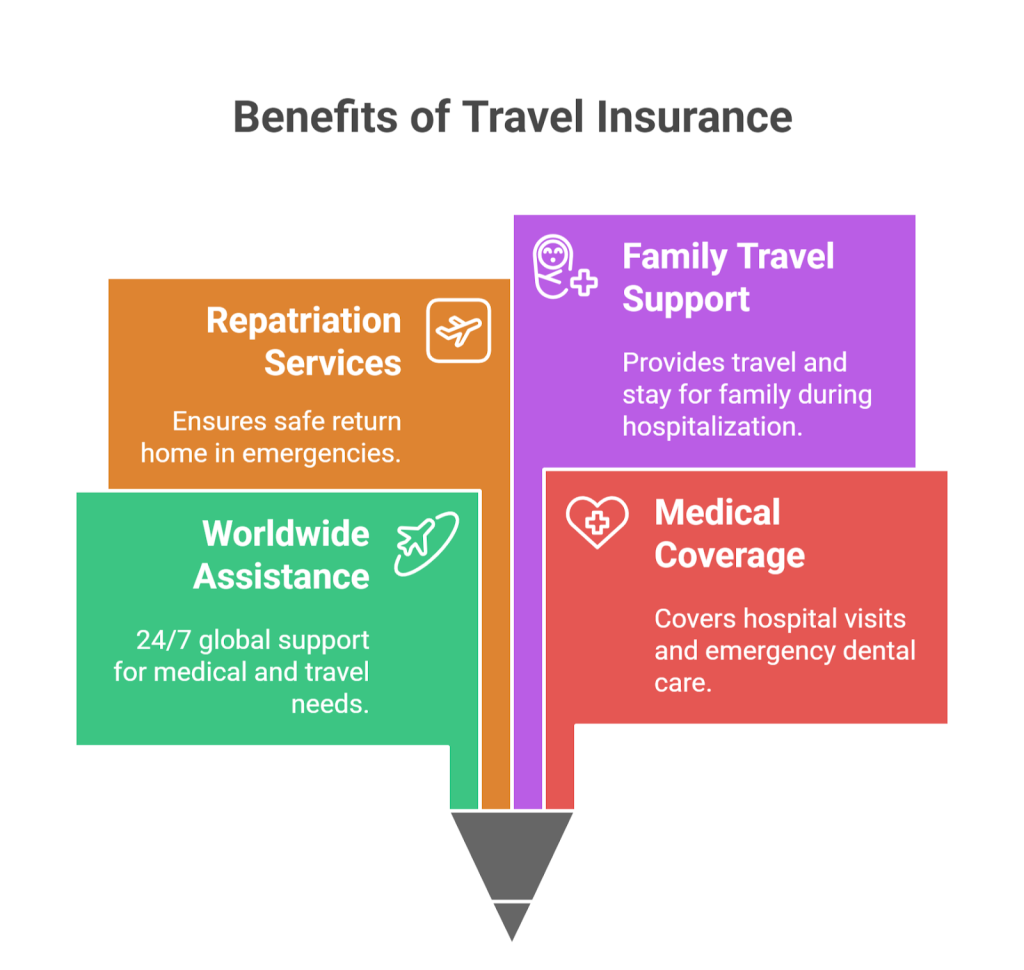
One of the main benefits of a good travel insurance company in Pakistan is the worldwide assistance feature. Imagine falling sick during your trip and not knowing where to go for help. With 24/7 assistance, travelers can access hospitals, medical networks, and claim settlement services online without delay. In addition, the policy also covers emergency dental care, repatriation, and even family travel support in case of hospitalization. For example, if you are hospitalized abroad, the insurance can cover the travel and stay expenses of an immediate family member, allowing them to be by your side during difficult times.

Another major reason to buy travel insurance is peace of mind while traveling for religious purposes. Many people traveling for Hajj, Umrah, or Ziarat often face crowded situations where the risk of accidents, injuries, or medical emergencies increases. Having a travel insurance plan means that pilgrims are not left stranded in case of emergencies. Coverage may include hospitalization, emergency transportation, and even the escort of dependent children if necessary. For families traveling together, this adds a layer of safety and assurance that someone will always be taken care of in difficult times.

Travel insurance is also highly beneficial for students and professionals traveling abroad. For students, health issues can not only disrupt studies but also add unexpected expenses. Similarly, business professionals traveling overseas for work cannot afford delays caused by medical emergencies or travel disruptions. Choosing the right travel insurance company in Pakistan ensures that these unexpected events are managed without affecting the purpose of your trip.

Different travel insurance plans are available to suit different needs. For example, standard packages may cover medical expenses up to USD 10,000, while premium plans can go up to USD 100,000. This flexibility allows travelers to pick a plan that matches their destination, duration, and risk level. Traveling to regions like the USA and Canada often requires higher coverage due to the high cost of healthcare, while European and Asian countries may be more affordable but still require coverage.

Another aspect of travel insurance is the non-medical coverage it offers. Many policies include compensation for lost luggage, flight delays, and even trip cancellations. These benefits may seem small compared to medical emergencies, but they can make a huge difference during your trip. For instance, if your luggage is lost on arrival, the insurance policy can help cover essential expenses until your bags are located. Similarly, trip delays or cancellations can be compensated, reducing the financial burden on travelers.

Choosing the right provider is crucial when deciding to buy travel insurance. Not all policies are the same, and it is important to understand the coverage details. A reliable travel insurance company in Pakistan will offer transparent plans, easy online claim settlements, and round-the-clock assistance. Reading the fine print, understanding the exclusions, and comparing different plans will help you choose the best option for your needs.

Travel insurance is not just a document it is a partner for your journey. Whether you are traveling to explore new countries, pursue education, attend business meetings, or perform religious duties, securing the right insurance ensures that nothing comes in the way of your experience. By spending a small amount on a travel insurance policy, you save yourself from the possibility of spending thousands of dollars abroad on unexpected issues.

In conclusion, every traveler should consider travel insurance as a necessary part of trip planning rather than an optional expense. Emergencies don’t come with a warning, and being in a foreign country makes it harder to deal with them. A trusted travel insurance company in Pakistan provides the support, coverage, and peace of mind every traveler needs. If you are preparing for your next trip, make sure to buy travel insurance before departure. It is a small investment that can protect your health, finances, and loved ones while you enjoy your journey abroad.


To get in touch with Habib Insurance, you can simply call at 111-03-03-03 for quick assistance or visit their official website at 🌐 www.habibinsurance.net. Their team is always ready to provide guidance, answer queries, and help you choose the right insurance plan tailored to your needs. Whether you’re looking for motor, health, travel, or general insurance solutions, Habib Insurance ensures reliable support and trusted services just a call or click away.